
There’s a version of A Tribe Called Love that feels familiar; two young people falling for each other despite the rules that say they should not. This is a story we have seen before, à la Romeo & Juliet, this story is shaped by love, resistance, and the weight of community.
Mohamed Ahmed’s debut feature starts as a recognizable setup which gradually reveals something layered, specific, and with emotional honesty about what it means to love within, and against, the rules you are raised within.
Setting the Scene
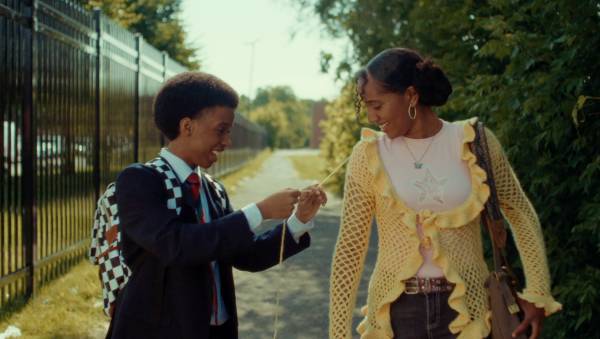
Set in a Somali neighbourhood in Toronto, A Tribe Called Love follows teenagers Farah (Ahmed Ibrahim) and Halima (Muntaha Mohamed) as they fall in love while ignoring warnings to stay apart because they come from different tribes. Their relationship is tender and fragile as it is influenced by the culture that surrounds them. In Somali culture, tribes define relationships, responsibilities, and even personal loyalties. They offer a sense of protection and history, but they can also create divisions, expectations, and pressure to conform.
As we see Farah and Halima’s love blossom, tensions between their respective families and tribes escalate. Halima’s father, a community elder, is very protective of his daughter and also about keeping tribe traditions alive. Within the Toronto Somali community, we see the tribes ideology interfere with local relations. We see leader of the North tribe ‘Big Money’ (Guled Abdi) try to keep the tribes united, but leader of the West tribe ‘The Commish’ (Nael Hubaishi) cannot and does not want to see the benefits of unity.
After a violent incident takes place among the tribes, where both Farah and Halima could have been harmed, Farah’s family decides to relocate to Vancouver. Sadly the young couple no longer keep in touch. Years later, Farah’s father asks him to go back to Toronto to sort family affairs. It is then, they are forced back to reconnect like it or not. Now in their twenties, it becomes clear Farah and Halima are willing to go beyond any barriers to rekindle their relationship.
Hye’s Thoughts on the Film
Given this is Ahmed’s first feature film, it is not perfect. There are elements in both halves of the film that feel rushed. First, in how the historical context of the feuding tribes is presented and how it manifests in contemporary times within the Toronto diaspora. Second, in the way adult Farah (Dalmar Abuzeid) and Halima (Feaven Abera) reconnect… the hurt and anger Halima expresses seems to dissipate in a matter of hours.
These are personal hiccups in the story for me. Nonetheless, there are other elements that stand out. Ahmed shot on location in Dixon (Toronto) with built-in collaboration with the local Somali community. This gives the film an authenticity with the inclusion of non-professional actors and the cultural details that shape their day to day. This grounds the story a bit more and allows us to root for Farah and Halima in hopes their relationship can surpass any feuds or hurdles they encounter.
The mix of professional actors and community members, as background actors, makes the film stronger for me. I appreciated the experienced Abuzeid and Abera brought to the main characters; their performances feel vulnerable and real. This is a testament to the importance of inclusion in front and behind the camera. As well, it reminds us of the need for filmmakers like Ahmed to tell their stories within and alongside their communities.
Stylistically, the film also includes animated sequences to give us a glimpse into young Farah’s inner world. These sequences help move the first half of the film forward while giving us an opportunity to understand the young protagonist’s state of mind. For some, these might feel distracting. For me, I enjoyed the extra layer they provided.
I also want to highlight other elements like the music we hear throughout the film. Blending Somali classics with contemporary sounds, it also adds extra layer linked to cultural identity. Music always gives films a rhythm that connects audiences to the personal and communal.
As a first feature, we can see Ahmed and crew have created a film that carries a lot of heart. This comes through in the way it holds both cultural pride while questioning cultural rules and practices at the same time.
A Tribe Called Love asks us to think about how love flourishes inside systems that often push against it. The younger generation challenging cultural norms makes this relevant for today, and also bridging a conversation with our elders. By the end, the film does not try to neatly resolve whether love is enough. It lets the question sit there, honest and unresolved.
Photos courtesy of Mahaica Point Media.