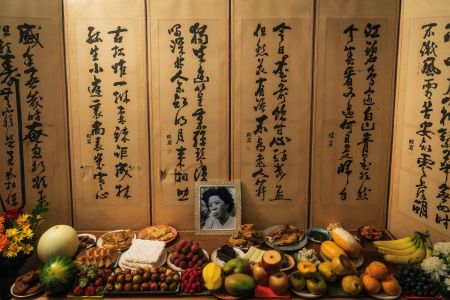
In There Are No Words, filmmaker Min Sook Lee turns inward to confront and explore silence, memory, and grief across continents in a poetic meditation on personal and communal loss and family legacy.
Content Warning: The film contains discussions of mental health issues including suicide, self-harm, and abuse. If you or someone you know is struggling, please reach out for support. In Canada you can call or text 9-8-8; support is available 24 hours a day, 7 days a week.
Setting the Scene
In There Are No Words, award-winning filmmaker Min Sook Lee turns the camera on herself, her own history, tracing the repercussions of her mother, Song Ji Lee’s suicide when she was twelve. This deeply personal documentary unfolds across continents, from Toronto to Hwasun, South Korea, where she revisits places that shaped her early life and her understanding of silence.
The film combines fragments of memory, language, and family history to uncover a web of grief and secrecy that has shadowed Lee’s life. Her 90 year-old father, once a national intelligence agent during South Korea’s Park Chung Hee regime in the 1960s, becomes both guide and obstacle. He is her last direct connection to her mother. Her father speaks in a language Lee does not always understand and whose recollections at times impede and complicate her search for truth.
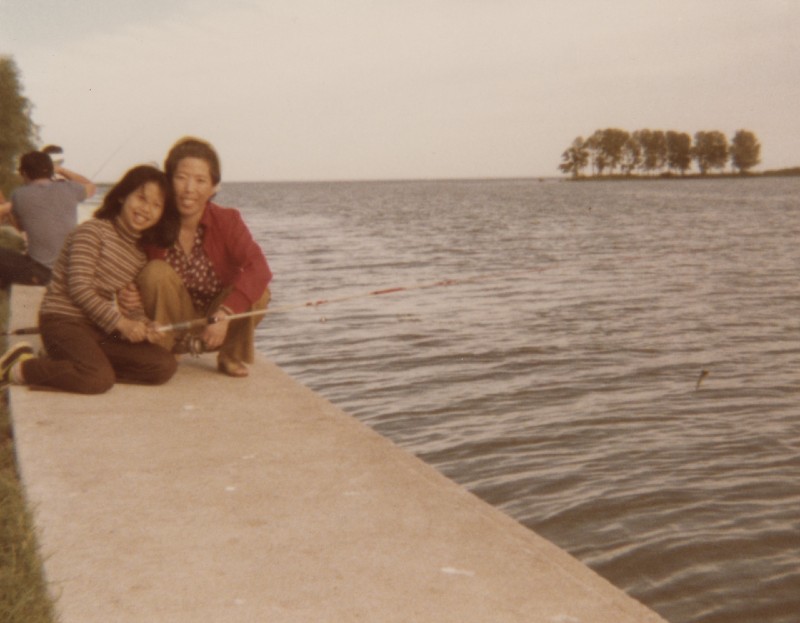
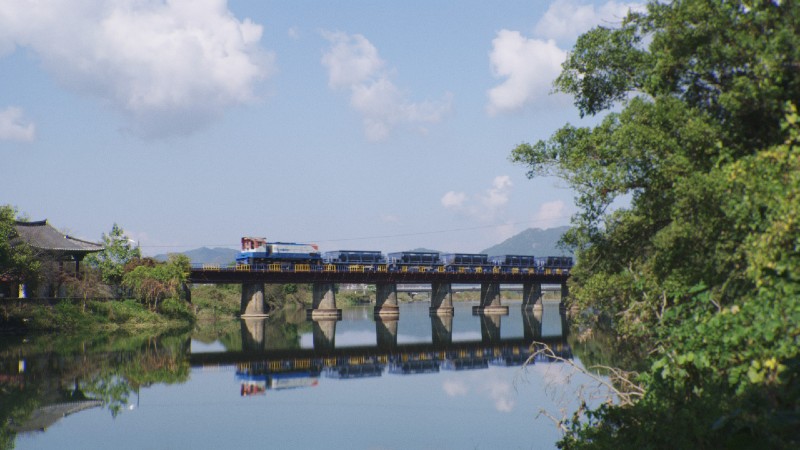
Lee’s approach is part memoir, part cinematic essay, part excavation. She has mentioned that the film revealed itself during editing. The film starts and ends with a Korean shamanic ritual known as kut. We also see scenes of a train crossing a Korean bridge, which gives us an idea of the ragged landscape in a physical and metaphorical way. These are combined with archival news footage alongside interviews with her father and other Korean-Canadian family friends. Lee places us in world full of gaps; the gaps in memory, in language, in connection. And so she continues to explore these gaps or spaces throughout the film.
Hye’s Thoughts on the Film
Confrontational and meditative, There Are No Words contemplates how trauma ruptures memory.
Anchored by Iris Ng’s composed cinematography, the film moves through real and imagined spaces. Through these spaces, Lee shows us that some stories must still be told, even when there are no words for grief. It is not common to experience a film that engages with grief, silence and the erasure of Korean-Canadian immigrant experience in a calm yet persistent manner. Lee’s presence as subject and director adds to the film’s authenticity and vulnerability, which is something I personally appreciate.
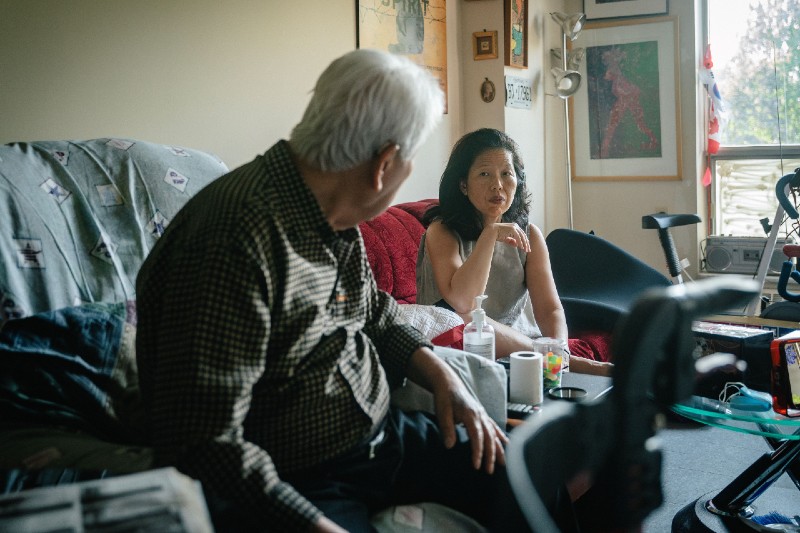
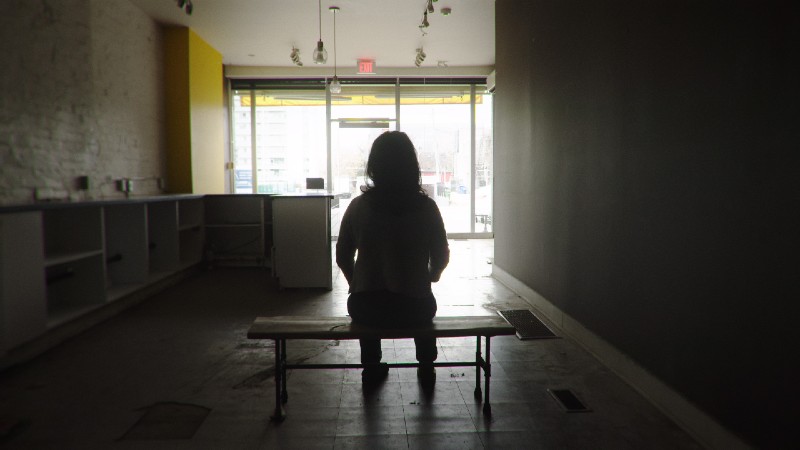
Given Lee’s dual roles here, it is even more impactful to witness her conversations with some of the interpreters and her childhood best friend. During these conversations, more memories come undone. Her childhood best friend was also affected by the death of Lee’s mother. Her friend shares some positive stories about Song Ji, whom others described as a strong but also fun woman. These scenes ‘broke me’ in the sense that I could see how much Lee did not remember her mother and how she had blocked out memories surrounding her mother’s suicide. These conversations ground the story for me in the personal and make it even more impactful in pointing out how we often do not fully understand our parents, grandparents or other elderly family members.
There are No Words is a film that asks a lot from us as an audience. We must sit with multiple feelings and be comfortable with uncertainty, unknowing, and silence. In the not-so-comfortable spaces is where we realize the importance of not always having a clear narrative. Most of our personal and communal histories are not always clear. This is also an artefact of memories that we build ourselves when we do not always have the ‘full picture’ so to speak.
The film also contributes to the evolving language of documentaries about diasporic stories. In these types of films, many of us get to explore questions such as, where am I from? or what does it mean to migrate? Those of us with many intersectionalities will also understand what the indescribable weight of grief, migration, and identity feel like.
To explore more about the film, I share my conversation with Min Sook Lee.
There Are No Words asks for patience and emotional presence. For those willing to sit with it, it offers a cinematic act of remembrance. It resists neat closure and instead offers a meditation on loss, intergenerational trauma, and the act of bearing witness when words fall short. The film reaffirms that documentary is not just about revealing truths, but about listening to what cannot be fully said.
Images courtesy of the National Film Board of Canada.