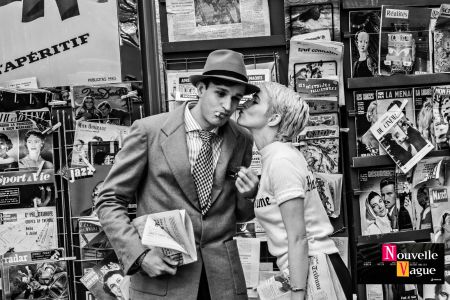
In the grand expanse of cinematic history, few movements are known as rebelliously as the French New Wave. In Nouvelle Vague, Richard Linklater gives us more than homage: he offers a genuine tribute to filmmaking itself and to the youthful spirit of Jean‑Luc Godard’s 1960 debut, À Bout de Souffle (Breathless).
Love Letter to the New Wave
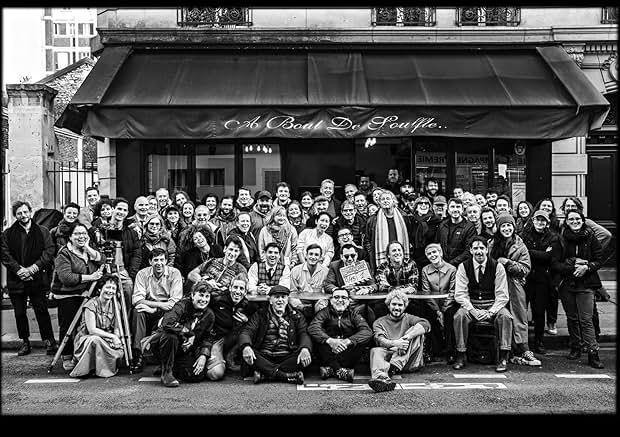
From the first frames, Linklater signals his admiration not through homage alone, but through immersion. He recreates the whole setting, the ragged jump cuts, the café chatter, and the improvised camera kicks with fidelity and admiration. The story opens at Cannes, where the idea for Breathless begins, then follows the crew using borrowed gear and their sense of “let’s go make something” that characterized Godard, François Truffaut and Claude Chabrol.
Behind the Scenes & In Front of the Lens
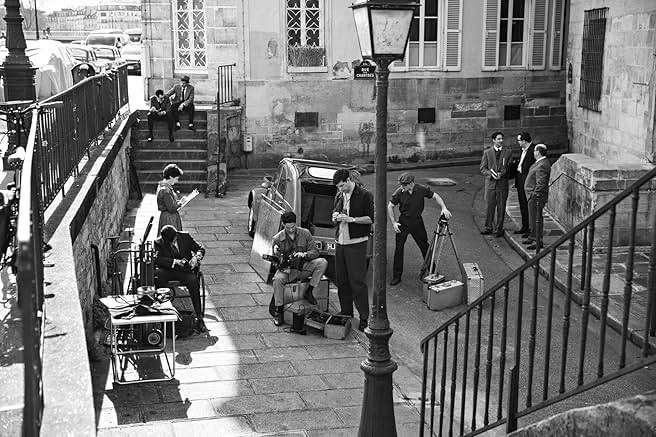
What makes Nouvelle Vague distinct is that it does not treat the making-of story as dramatization. Instead, the screenplay by Holly Gent, Vincent Palmo Jr., Michèle Halberstadt Pétin and Laetitia Masson, threads the creative process itself into the narrative. We see the camera being strapped to a moving car, the impromptu outdoor shoots, the ongoing crew discussions. That spirit lives in Linklater’s direction which balances the historical with the performances; you sense the actors sweating for their shot, the location shining with summer light and the buzzing sounds of Paris.
The Feel of the Moment
I really appreciate how Nouvelle Vague subtly echoes the original without being derivative. Kudos to the David Chambille’s cinematographic work. The jump cuts, freeze frames, street-car rides, the café tables all set the mood but also infuse it with humour. The film asks us to consider what it felt like to make Breathless. And in doing so, it becomes a more emotional journey. Linklater’s interest in the humanistic aspects of storytelling become tribute into something living. I found myself drawn in, not as a Godard fan, but as a fan of good cinema and storytelling.
The Young Cinema that Changed Everything
Watching Nouvelle Vague, it’s impossible not to be swept by nostalgia. Although nostalgia here is not purely sentimental; it is bold and dynamic. We witness a group of young filmmakers who believed in possibility: that cinema could break rules, could borrow from life, could shoot in cafés, could dissolve plot for rhythm. Through Linklater’s direction you feel that “anything-could-happen” charge. The leads
Co-writer and producer Michèle Halberstadt Pétin spoke of how the team looked at original frame grabs and production notes from 1959, then asked: “What would it be like to make that today, with the same throw-the-rule-book-out ethos?” The result is a film that not only pays tribute to Godard and the New Wave, it revitalizes it.
Halberstadt Pétin also talks about how the film has become a “love letter to the moment cinema changed forever”.
Hye’s Final Thoughts
True, there are moments where the recreation can may things feel too polished for some. However, given the goal is to celebrate a shining moment when cinema leapt ahead, the film succeeds quite well. Nouvelle Vague is for the cinephile surely, but it will also please any viewer who has ever felt the excitement in watching good cinema… cinema that can become revolutionary in some way. It invites us not only to look back at Godard’s work, but to remember that thrilling instant when camera, light, youth and possibility collided. It is heartfelt, beautifully shot, and intelligent without being too serious or pretentious. I came away with the sense that this film was made by people who really love the act of making film, and that love comes through on screen.
Nouvelle Vague
Director: Richard Linklater
Writers: Holly Gent, Vincent Palmo Jr., Michèle Halberstadt, Laetitia Masson
Producers: Laurent Pétin, Michèle Pétin
Nouvelle Vague is currentlly showing in cinemas across Canada and the world.
Film Photos: Photon Films and IMDb.