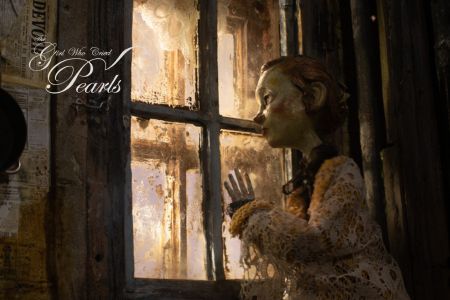
The National Film Board of Canada (NFB) animated short The Girl Who Cried Pearls by Chris Lavis and Maciek Szczerbowski has been nominated for Best Animated Short Film at the 98th Academy Awards.
About the Film
In Montreal, at the beginning of the 20th century, a poor boy falls in love with a girl whose sorrow turns into pearls. He sells them to a ruthless pawnbroker, who hungers for more. Tempted by greed, the boy must choose between love and fortune.
The story is told by a grandfather to his granddaughter about an experience from his youth. As a young man, in the building where he lived, he observed a young, very sad girl whose tears turn into pearls. When he decides to sell the pearls, he learns a very valuable lesson about the things that are most important in life and love.
The film features a star-studded creative team, including Colm Feore (voice), Patrick Watson (music) and Brigitte Henry as artistic director. Sound design is by Olivier Calvert, who was on the team for Denis Villeneuve’s film Arrival, winner of the 2017 Oscar® for Sound Editing.
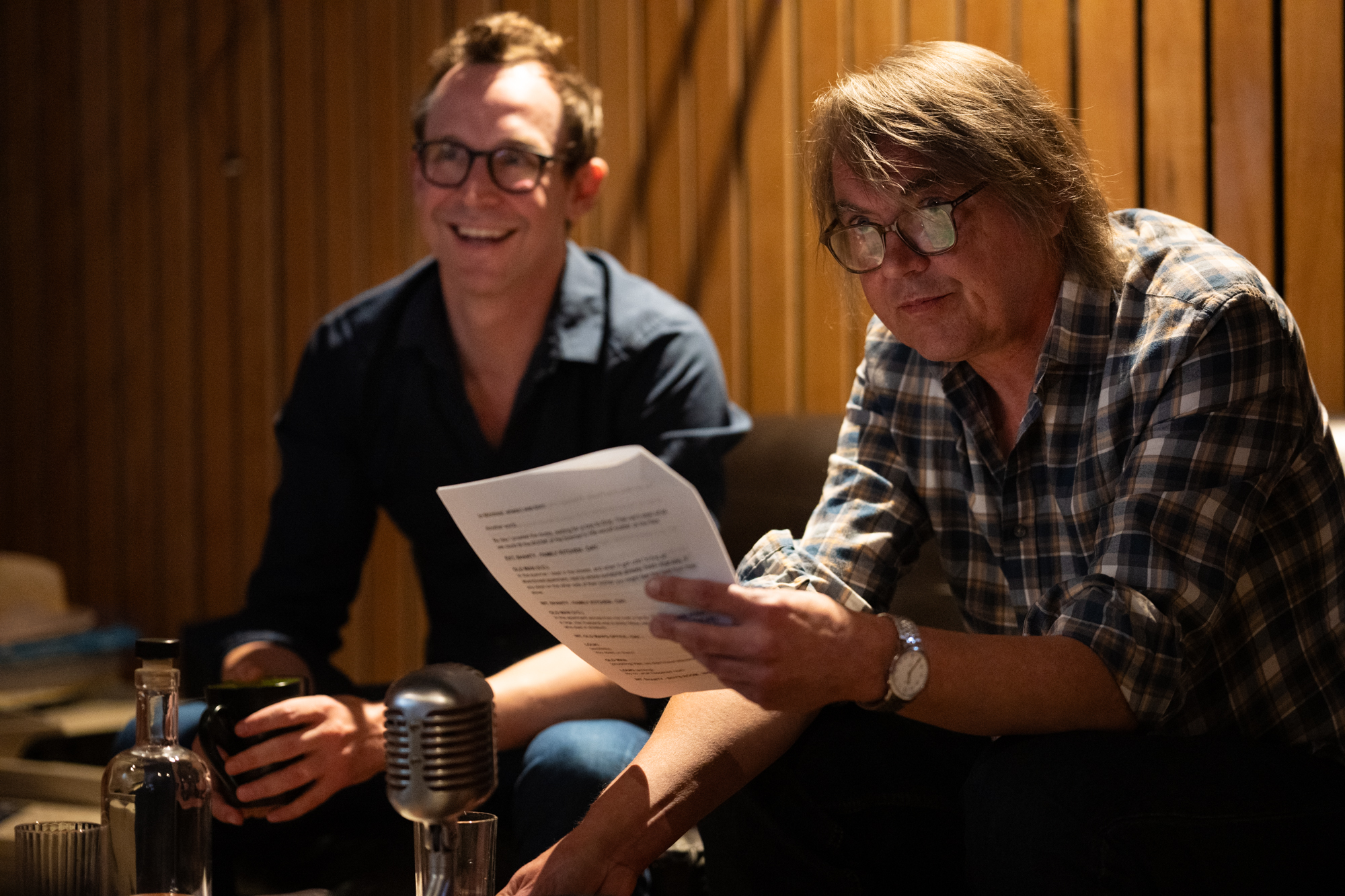
About The Filmmakers
Lavis and Szczerbowski met as students in Montreal, founded Clyde Henry Productions in Toronto and later moved the studio back to Montreal. Their storytelling breaks away from the usual “hero’s journey” and instead plays with how we see and experience film.
Their debut film, Madame Tutli-Putli, earned an Oscar® nomination for Best Animated Short. They later adapted Maurice Sendak’s Higglety Pigglety Pop!, featuring Meryl Streep. They served as art directors for Guy Maddin’s The Forbidden Room (2016) and were honoured with retrospectives at Annecy and the Cinémathèque Québécoise (2017). Their 2019 VR stop-motion film Gymnasia, co-produced by Felix & Paul Studios and the NFB, won multiple awards.
The Girl Who Cried Pearls, the duo’s latest film, made a huge splash on the festival circuit, earning selections and awards at 31 festivals around the world, including major wins at Annecy, Bucheon, Ottawa, Rome and TIFF, among many others.
Interview with Co-Director Chris Lavis
Lavis speaks about his career in animation, his longtime friendship and collaboration with Maciek Szczerbowski, and the making of The Girl Who Cried Pearls.
Hye’s Thoughts on the Film
The work that goes into a stop-motion animated film is astounding to me. It is a labour of love which takes years to complete. Lavis and Szczerbowski built rough mock-ups of sets, rehearsed with actors and filmed the entire script from multiple angles. This process allowed them to capture “nuances and real behaviour” and preserve spontaneity in both the performances and the camera work.
The filmmakers decided that CG mouth animations would only be used for scenes set in the present, while for scenes set in the past, the puppets would have fixed expressions: they could only emote through gesture and pantomime. The modern-day puppets would be painted in silicone, while the characters from the past would be painted in oil, evoking wooden church idols or puppet theatre marionettes. The contrast between the two styles, past and present, modern and nostalgic, matches the themes of the film perfectly.
The result is a beautiful film that spans past and present. There is richness in story but also in the artistry used to tell it. From the puppets, the sets, the music and entire art direction, this is a film that requires repeat viewings.
The Girl Who Cried Pearls is a meticulously crafted story about a girl overwhelmed by sorrow, the boy who loves her, and how greed leads good hearts to wicked deeds.