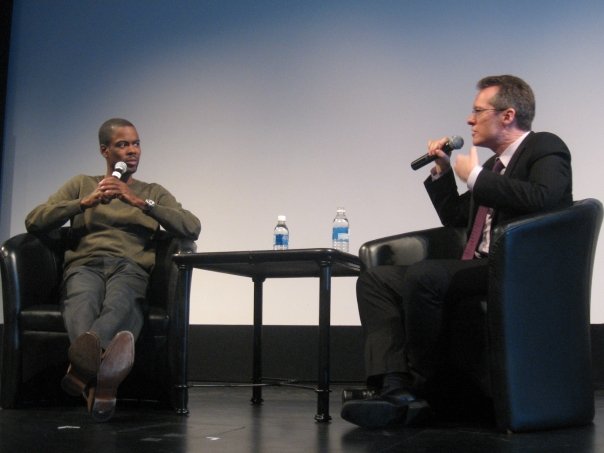
TIFF can be exciting, overwhelming, exhausting and frankly, a little chaotic… Sometimes all in the same day!
After experiencing the festival as a volunteer, a cinephile and now as media, I have learned that having a good TIFF experience is not always about seeing the most films or getting into every major premiere. For film fans, it is more about knowing how to navigate the festival without losing sight of why you are there in the first place: to discover new films, connect with other film lovers, and enjoy yourself.
As TIFF 2026 approaches, here are five things I wish every TIFF-goer knew.
1. Avoid building your TIFF around the “must-see” films.
Over the years, I have seen how tricky it is to over plan your schedule around “must-see” or hyped films.
Of course, we have all have favourite actors, filmmakers and stars. However, TIFF has now become such a large festival that it cannot be reduced to a handful of films. To be honest with you, some of your best experiences can come from films you did not have as a “must-see” and knew little about.
By now, you know some films will be released in a few weeks or months. My point here is to not let FOMO dictate your entire schedule. And remember, TIFF is unpredictable. A film you know almost nothing about can become your next favourite or an award contender.

2. Learn the difference between TIFF the festival and TIFF the celebrity extravaganza.
Red carpets and stars are part of TIFF, but they are not the whole festival. As of late, social media and all of us sharing photos or videos of ‘famous people’ we see at TIFF only adds to this perception.
For me, the actual festival is about filmmakers and their teams, films, audiences, volunteers, programmers and the experience of watching something together. When I was a cinephile-in-training, volunteering at TIFF took me on a journey around the world of cinema.
Sure, I once helped escort Ethan Hawke into a cinema and bumped into fashion designer Valentino. These are memorable events of course, but through TIFF, I have found favourite film genres, favourite directors, actors, composers, cinematographers… well, you get it. I have also made great friends, and met fellow film programmers and media writers.
The red carpets are fun, but the core festival is still about films, filmmakers, their teams, and being in community with fellow film enthusiasts like you and me.

3. Leave room in your schedule.
Getting into the more practical side of TIFF-ing. I highly recommend not scheduling every minute.
Give yourself time for lineups, conversations, food, travel time, and some unexpected opportunities (free coffee anyone?). In my experience, a packed schedule can turn TIFF into a logistical mess instead of a fun festival experience.
I would hate for some of you to max out by the first weekend. Remember, the festival is 10 days long. The way I see it, your schedule should have some breathing room. Your best TIFF experience may come from a film you discover because you had a break or something else that did not work out.

4. Make tiffr.com Your Best Friend
I am not going to lie, 2026.tiffr.com has become a Pro Hack for those of us attending the festival over the last several years.
This is THE practical tip for you. The tiffr folks have all the feature and short films listed with options of ‘maybe’, ‘want to see’ and ‘must-see’. Every year, I use tiffr to build my shortlist of films, organize my days and see which film programs I definitely want to check out.
A bit of my ‘play by play’ with tiffr includes the following:
- I heart (like) the film titles I am interested in and using the categories listed above.
- I use the TIFF website link to view the Cast & Crew section to see if the film has a Canadian Distributor.
- If no, I will add it to my Want To See or Must-See list.
- If yes, I will add it to my Maybe list and probably not see it.
- I have now a Shortlist which is divided in the three aforementioned categories.
- You can view my current shortlist here, if you’d like.
- From this Shortlist I build a tentative schedule using the Planner option.
- From the Planner, I create a schedule which in my humble opinion, is never a final schedule.
I do write some film titles in my little TIFF notebook. However, I recommend using tiffr on your mobile so you can refer to your shortlist any time. Maybe you decide to ‘rush’ a film based on a gap or change in your schedule. Keep your options open.

5. Rush lines are not a failure.
Rush lines are part of the TIFF experience and quite frankly, another way to see something you otherwise might not.
If you are new or new-ish to TIFF, a sold-out screening does not necessarily mean there is no chance to get a ticket. Rush lines are usually formed outside the venue and they can be unpredictable, which is also part of the TIFF experience.
You may get into a screening you thought would be impossible. And even if you do not get in, the experience of talking to other festival-goers in line can make that time waiting more fun.
Take home message, a rush line is an option for a film you want to see but is not a guarantee.

As you can see TIFF is more than celebrities and premieres. The festival is possible because of the programmers, volunteers, projectionists, journalists, publicists, filmmakers, actors, festival staff and audiences. We all come together for 10 days in Toronto to fully immerse ourselves in cinema.
Some of my best TIFF experiences are the ones I did not plan. The idea is not to “win” TIFF, but to have the best experience possible.
TIFF tickets are now on sale to all members of the public. For festival programs, schedule and tickets, please visit tiff.net.